Sustainability
At the Ruhr Innovation Lab, we are committed to shaping a sustainable future. Aligned with the United Nations’ Sustainable Development Goals (SDGs), we are passionate about driving change and fostering collaboration towards a more sustainable world. Both universities have embedded sustainability strategies and initiatives into their core, actively participating in regional, national, and international networks. Together, we innovate, inspire, and implement solutions that make a lasting impact.
Green Visions, Shared Goals
Ruhr University Bochum and TU Dortmund University are dedicated to driving transformation to address the global challenges of the 21st century. At the Ruhr Innovation Lab, we understand sustainability not merely as a goal but as a shared responsibility and strategic commitment. Guided by comprehensive sustainability strategies, both universities take a holistic approach—integrating ecological, social, and economic dimensions across research, teaching, transfer and their own operations—to create knowledge that enables change towards a sustainable future.
Innovating Sustainability Together
Through innovative research projects, scientists from Ruhr University Bochum and TU Dortmund University are developing solutions for a greener future—from climate-resilient land use and efficient energy networks to sustainable hydrogen production—advancing innovation for global sustainability.
-

The Collaborative Research Center / Transregio “Spatio-temporal Statistics for the Transition of Energy and Transport” is a joint project of TU Dortmund University and Ruhr University Bochum. Funded by the German Research Foundation since 2024, the TRR 391 develops statistical methods to model and forecast reliable data in economic and technical applications. The results will support decision-making in transport logistics, enable precise forecasting of wind and solar power generation and yield a better understanding of the impact of environmental policies on energy prices. -
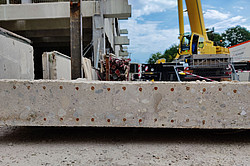
An unimaginable 16 billion tons of concrete have been used in Germany since 1945. Many buildings will be ready for demolition in the coming decades. The team of the Collaborative Research Center 1683 “Methods of Interaction for the Modular Reuse of Existing Structures”, coordinated in Bochum, investigates how existing elements of old buildings—like ceilings, walls, columns and foundations—can be reused for new ones. -
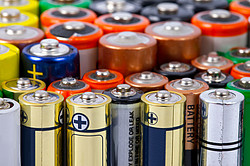
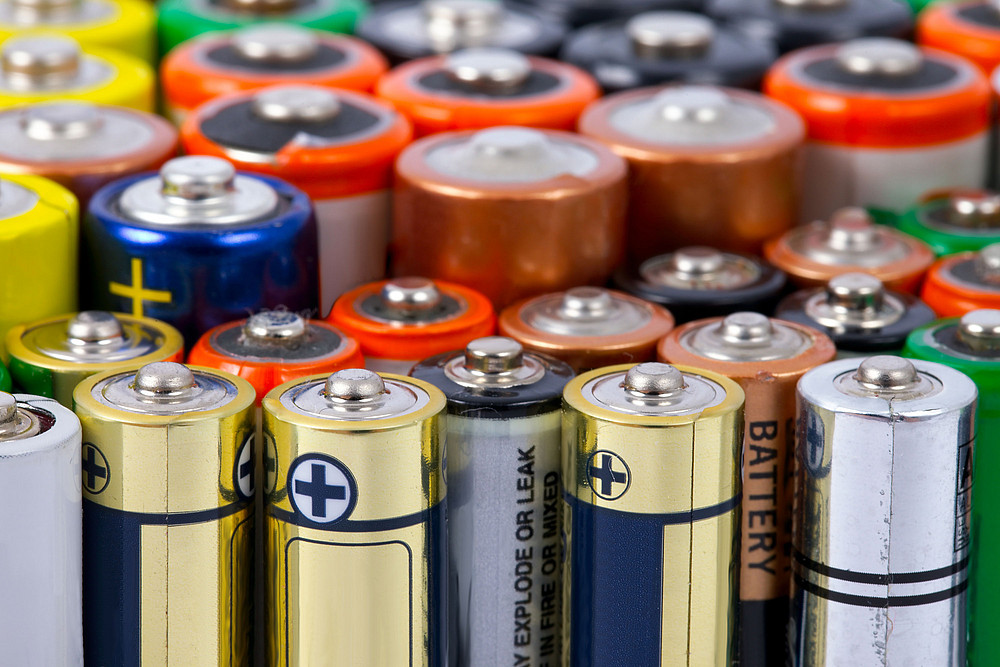
Coordinated by TU Dortmund University’s Department of Electrical Engineering and Information Technology, the Horizon Europe project HealingBat develops self-repairing battery technologies. Funded with €5.8 million, the research consortium designs smart lithium-sulfur batteries with integrated sensing and self-healing mechanisms—making future energy storage systems more durable, efficient, and sustainable. -
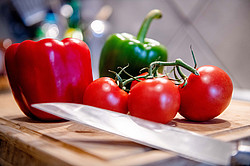
The EU produces 900 million tons of residual biomass every year; 98 percent remain unused. The EU project PRIMED, which is coordinated by Ruhr University Bochum, aims at converting biowaste into bio-based products such as bioplastics or biofuels. The project partners are developing circular business models that integrate primary producers and end consumers into innovative value chains. -
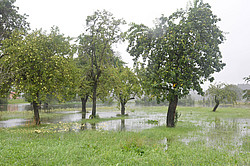
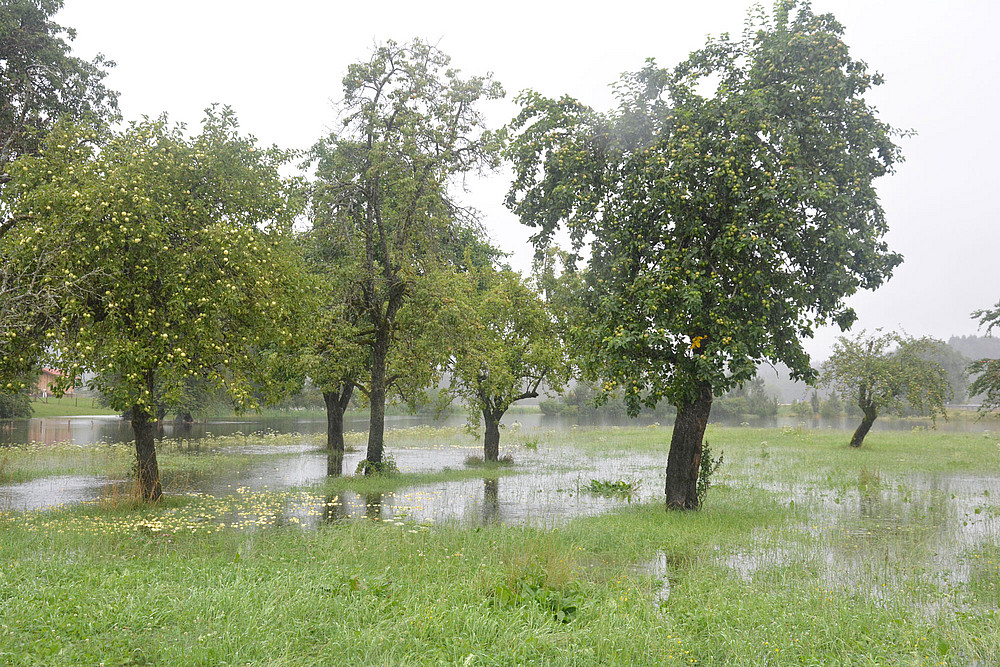
Led by TU Dortmund University’s Department of Spatial Planning, the EU-funded project LAND4Climate explores how nature-based solutions can systematically strengthen Europe’s climate resilience. With €13 million in funding and 16 partners across six countries, the consortium investigates how private land can be used for adaptive measures that reduce climate risks aiming to enhance the resilience of urban and rural areas. -

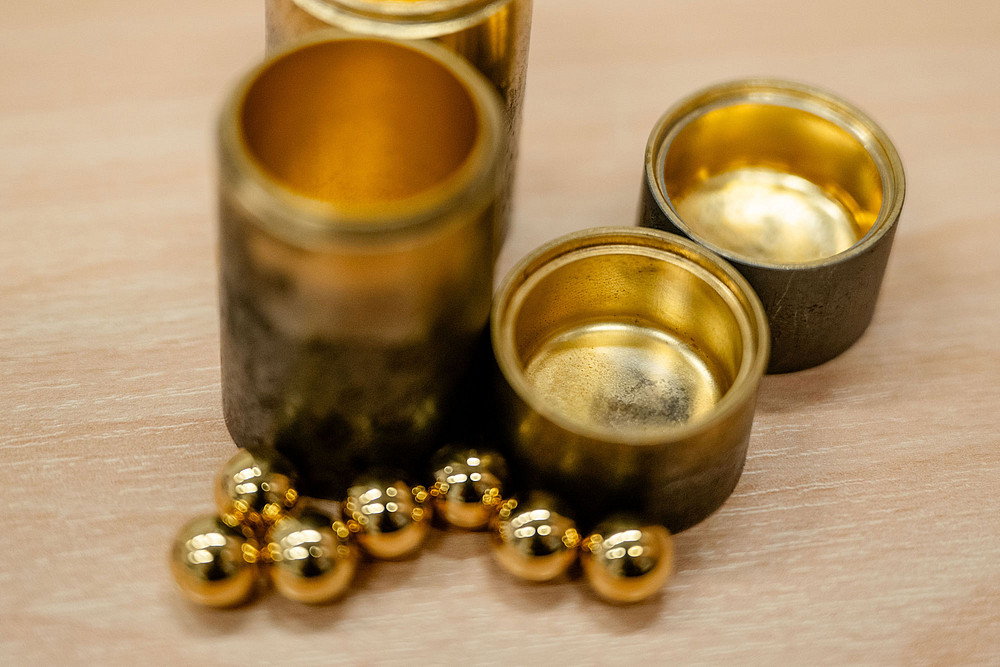
The chemical industry generates large amounts of waste through the use of solvents; it also consumes immense amounts of energy for heating in chemical reactions. In the ERC grant “Mechanochem,” a team at Ruhr University Bochum is researching the use of ball mills to drive chemical reactions with mechanical energy—without solvents and without heating. -
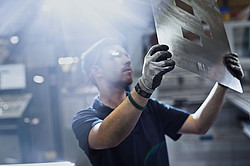
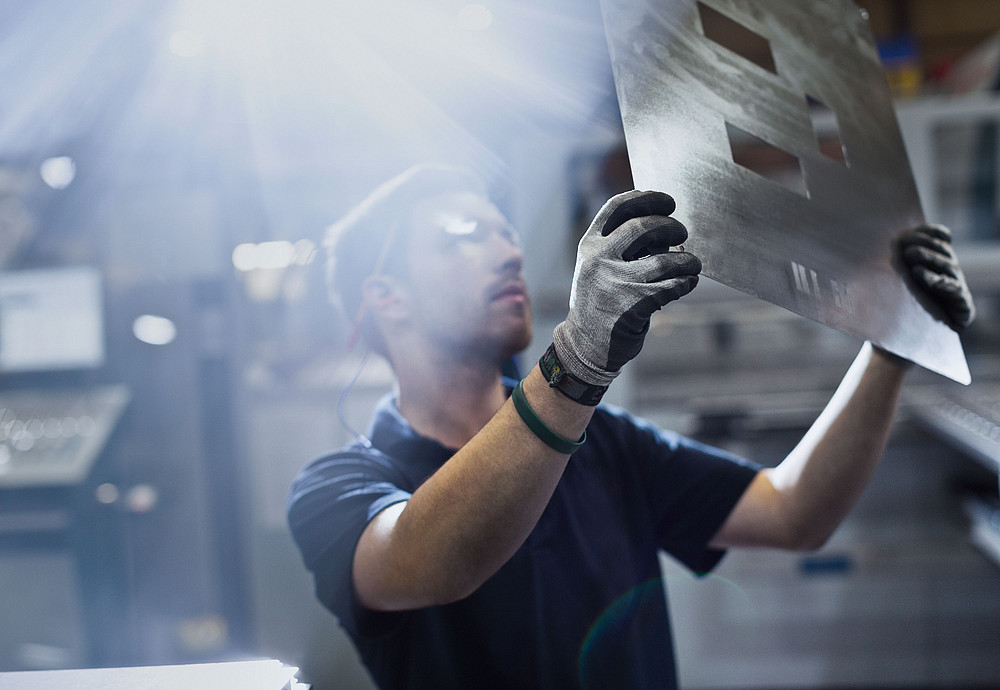
Collaborating with partners across Europe, the Social Research Centre Dortmund (sfs) contributes its expertise in social innovation and industrial transformation to the research project “SUPER – Sustainable Future Steel Production and People Recruiting and Skilling.” The EU-funded project addresses key challenges on the steel industry’s path to climate neutrality and promotes an integrated approach to decarbonization by linking technological progress with workforce development. -
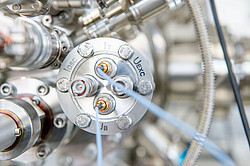
Germany will need several million tons of green hydrogen annually in the future. Green hydrogen is produced in an environmentally friendly way from water using renewable energies. The hydrogen flagship project “H2Giga,” in which Ruhr University Bochum is involved and which is funded by the Federal Ministry of Education and Research, is researching how green hydrogen can be produced on an industrial scale. -

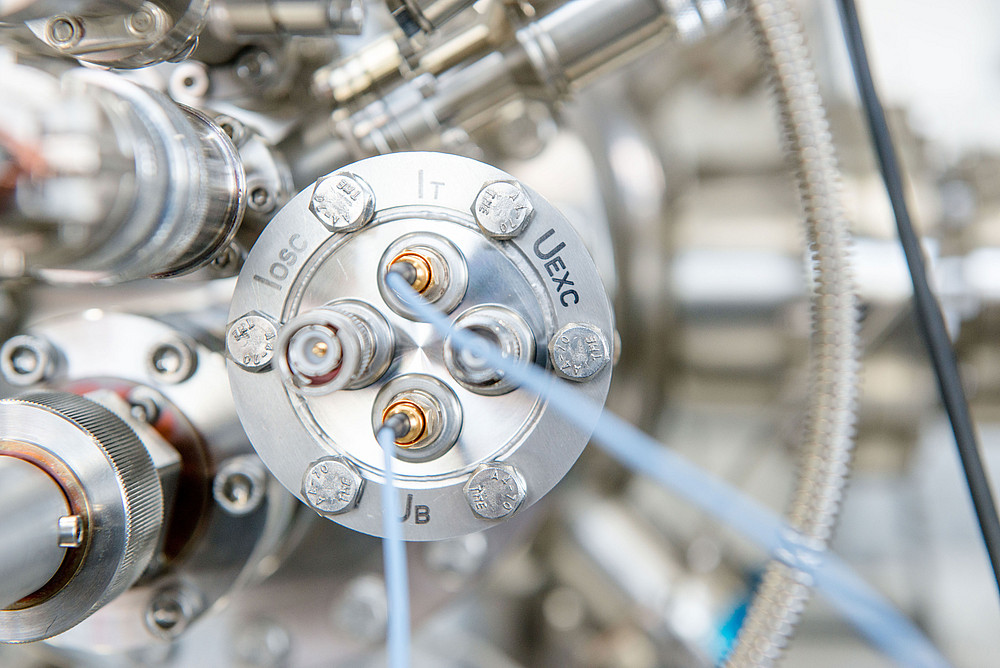
Opened in 2018, TU Dortmund University’s High-Voltage Direct Current (HVDC) test center advances Germany’s energy transition by developing components for the safe and efficient transmission of renewable electricity across long distances. Led by Prof. Frank Jenau from the Department of Electrical Engineering and Information Technology, researchers test innovative insulators and design measuring systems to be used under extreme conditions. They also collaborate with industry partners to turn cutting-edge research into practical solutions for sustainable power networks.



Turning Research into Action
At the Ruhr Innovation Lab, we strive to translate sustainability research into tangible impact through innovative start-ups and transfer initiatives. By connecting scientific insights with entrepreneurial spirit, we foster solutions that drive ecological and social transformation. Through these collaborations, sustainable knowledge becomes practice—empowering change across academia, industry, and society.
-
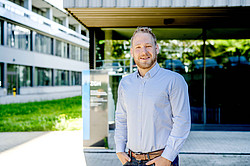
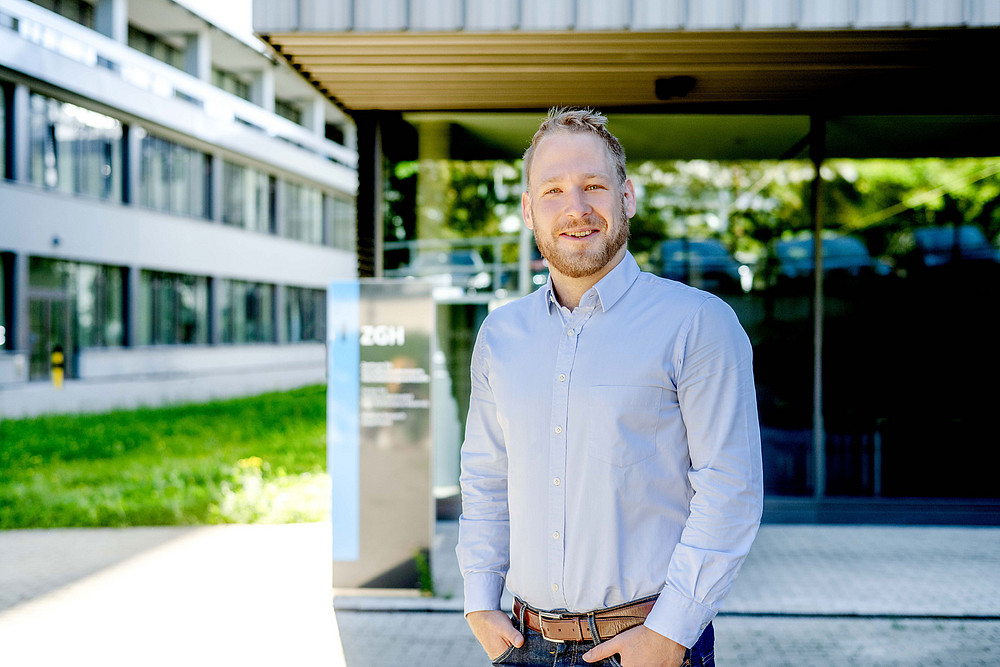
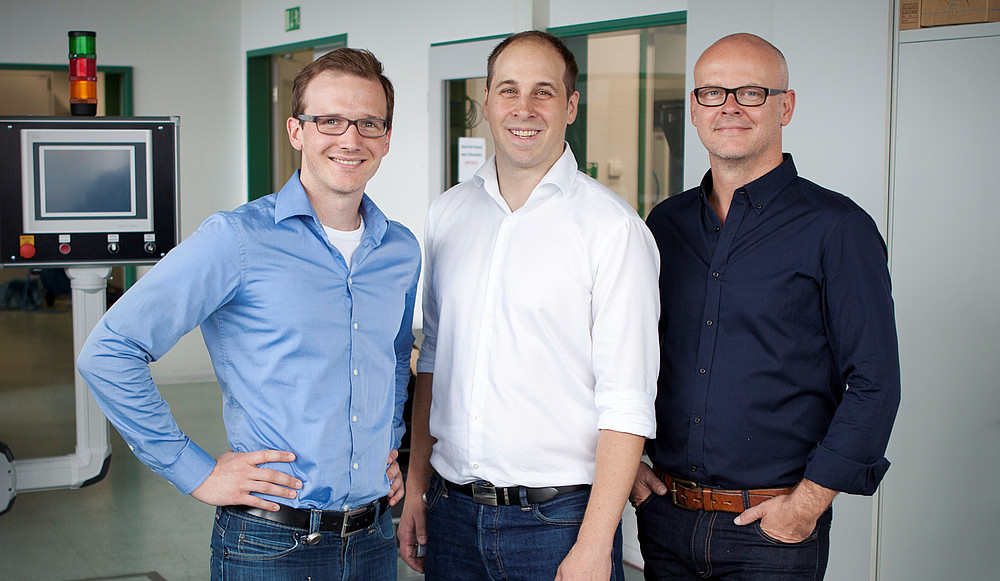
Green hydrogen can be used to store wind and solar energy and convert it back into electrical energy—without any CO2 emissions. The catalysts required for hydrogen production often consist of expensive precious metals whose mining harms the environment. The start-up xemX at Ruhr University Bochum, led by Sven Maihöfer and two colleagues, is using AI-data-driven high-throughput research to find new materials for catalysts. -
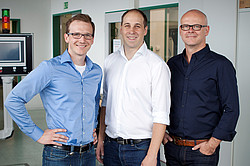
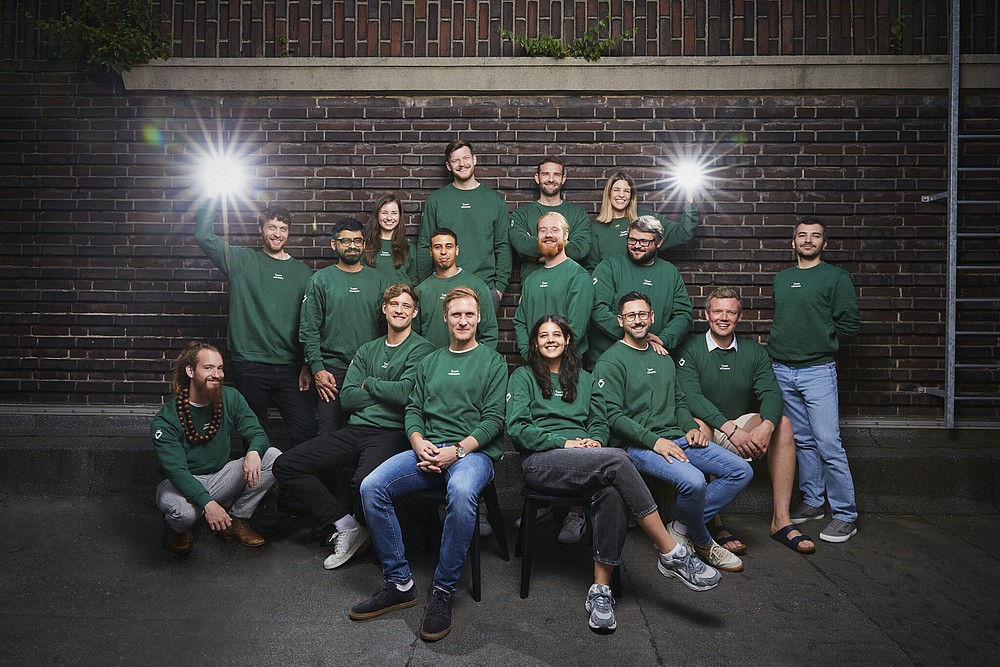
Founded in 2015, Volterion develops and manufactures innovative energy storage systems for commercial use based on the advantages of flow technology. Established by alumni of TU Dortmund University as a spin-off from Fraunhofer UMSICHT, the company was supported by the university, receiving the TU Start-up Award in 2016. Based in Dortmund, Volterion is dedicated to developing reliable long-term energy storage solutions that contribute to create a more sustainable world through efficient technologies. -

The start-up Okeanos aims to better protect people and communities from extreme weather events. To this end, Dr. Benjamin Mewes and his team combine hydrology and artificial intelligence. The focus is on flooding, heavy rainfall, urban drought, and sewage treatment plant optimization. In 2023, the team was honored with the QUBO Innovation Award, which was presented for the first time that year. -
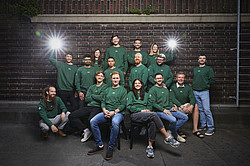
Founded in 2020, vGreens optimizes vertical food cultivation in urban greenhouses with software that uses artificial intelligence to control irrigation, lighting, and temperature. In 2022, the pilot farm for strawberries opened in the Ruhr region, and in 2025, an industrial facility was inaugurated in Singapore. Claas Ahrens, one of the co-founders of vGreens, is an alumnus of TU Dortmund University, and the university also has an investment stake in the start-up. -
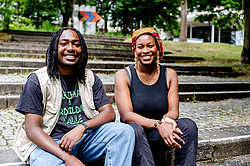
Marya Kapenda, a student at Ruhr University Bochum, teamed up with Ben Aziabou, a computer science student from TU Dortmund University, to start up “afro drinks by bam GmbH”. The aim is to sell the African drink bissap, which is made from the dried flowers of the hibiscus plant and is still pretty much unknown in Germany. The team plans to use their income to build a youth center in Togo. -
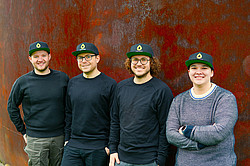
The award-winning start-up Simplyfined is able to produce platform chemicals for industry based on vegetable oils as renewable raw materials. The company was founded in 2025 based on a process developed by Maximilian Spiekermann at the Department of Biochemical and Chemical Engineering at TU Dortmund University. As part of a federal funding program, the start-up received €1.7 million to build a fully continuous pilot plant. -
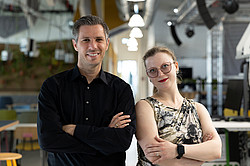
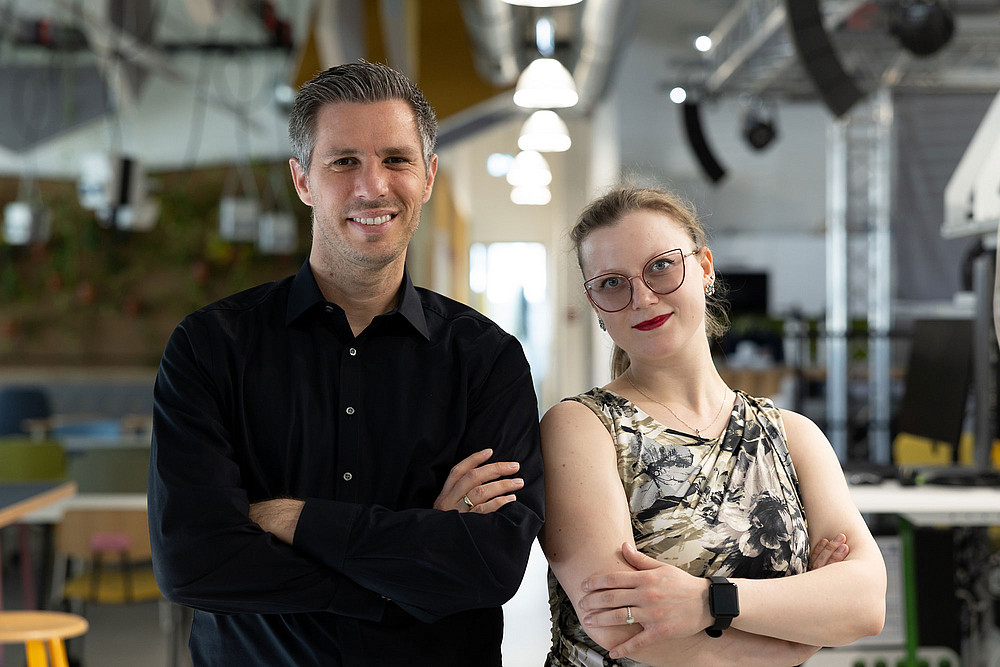
With their start-up “Mechanolution” from Bochum, Desislava Dobreva and Sebastian Grothaus want to revolutionize the chemical industry by driving chemical reactions with mechanical energy. This could save up to 90 percent of energy and thousands of liters of solvents per cycle. Since the method would enable local production, long and intrasparent supply chains could be eliminated. -
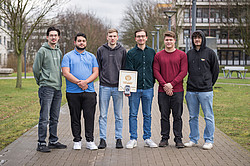
For several years, students from TU Dortmund University have participated in the “Engineers Without Borders Challenge,” applying their engineering expertise to address real-world problems in international development by designing sustainable technical solutions. In 2024, a TU Dortmund University team won the nationwide competition with their “Light Lab Board” for Ugandan schools—combining innovation, social responsibility, and global awareness.




Empowering the Next Generation
Building Skills for the Energy Transition

As “International Academy for German Engineering and Science” (IAGES), TU Dortmund University, Ruhr University Bochum, the University of Duisburg-Essen and Düsseldorf University of Applied Sciences will offer four joint English-language master’s programs on the energy transition. The three-semester courses impart skills that are necessary for a sustainable future, including management of green energy systems, sustainable building design and low-emission solutions for logistics. IAGES is partner of the EUREF Campus Düsseldorf.
Sustainability Certificates: Learning for a Greener World
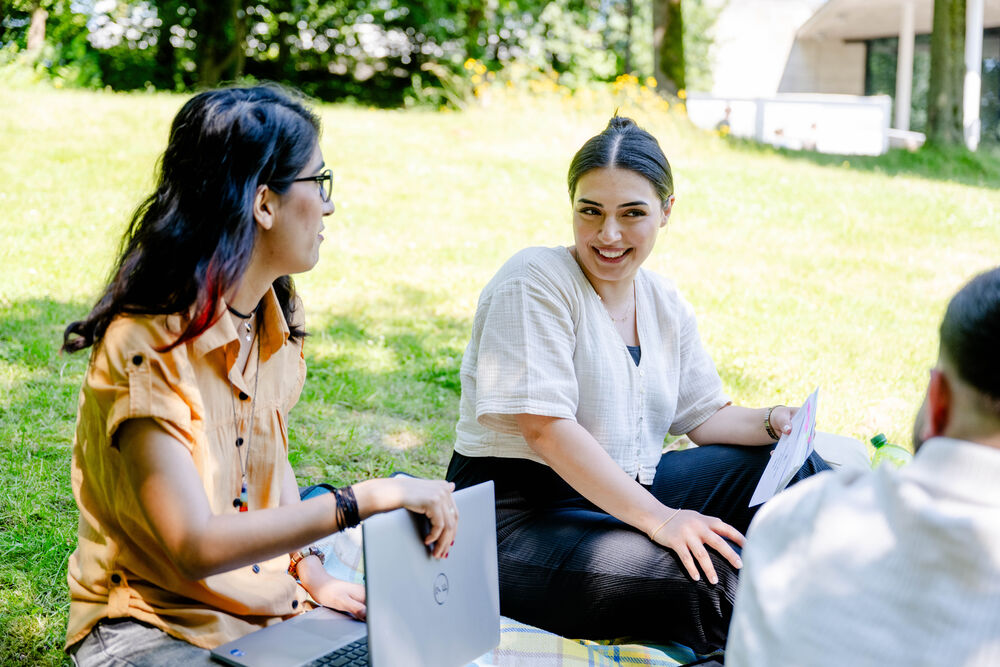
The Ruhr Innovation Lab provides students with the knowledge and skills to shape a sustainable future through certificate programs. In 2021, TU Dortmund University was among the first in Germany to launch such an initiative with its studium oecologicum—completed by over 120 students—while Ruhr University Bochum followed in 2023 with its own sustainability certificate. Public lecture series on climate change form the core of both initiatives, fostering interdisciplinary learning and inspiring action for global sustainability.
Education for Sustainable Development: Shaping Tomorrow’s World
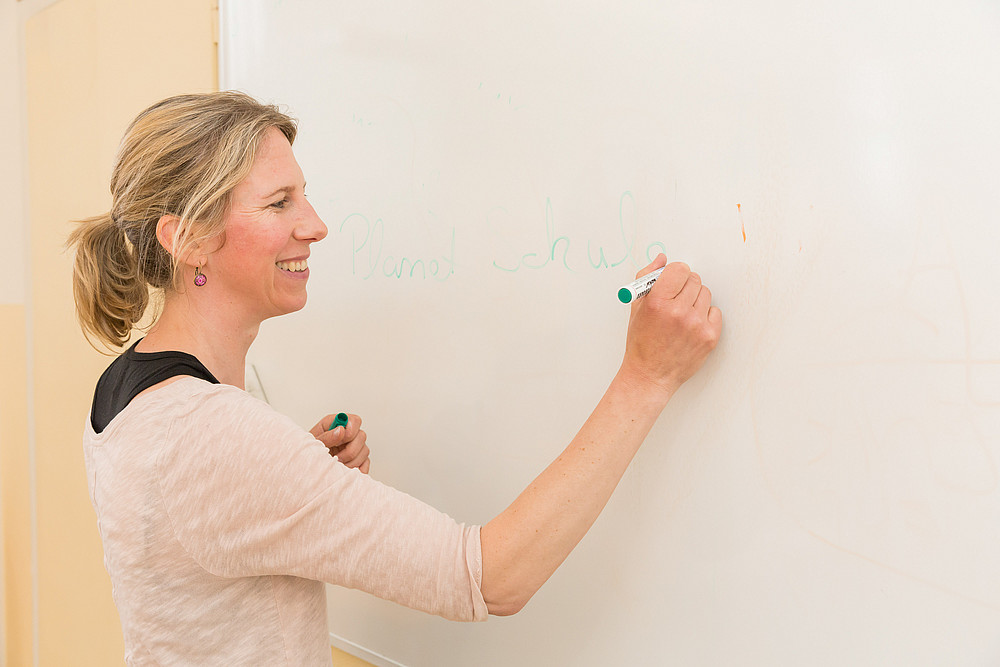
Ruhr University Bochum and TU Dortmund University integrate Education for Sustainable Development (ESD) into teacher training to equip future educators with the skills needed to foster social and environmental transformation. Through innovative projects such as TU Dortmund University’s digital BNERoom –funded with €50,000 through the digi-Fellows program– and Ruhr University Bochum’s ESD tutor training program, students learn how sustainability can be effectively addressed in education and society.
Where Sustainability Takes Root
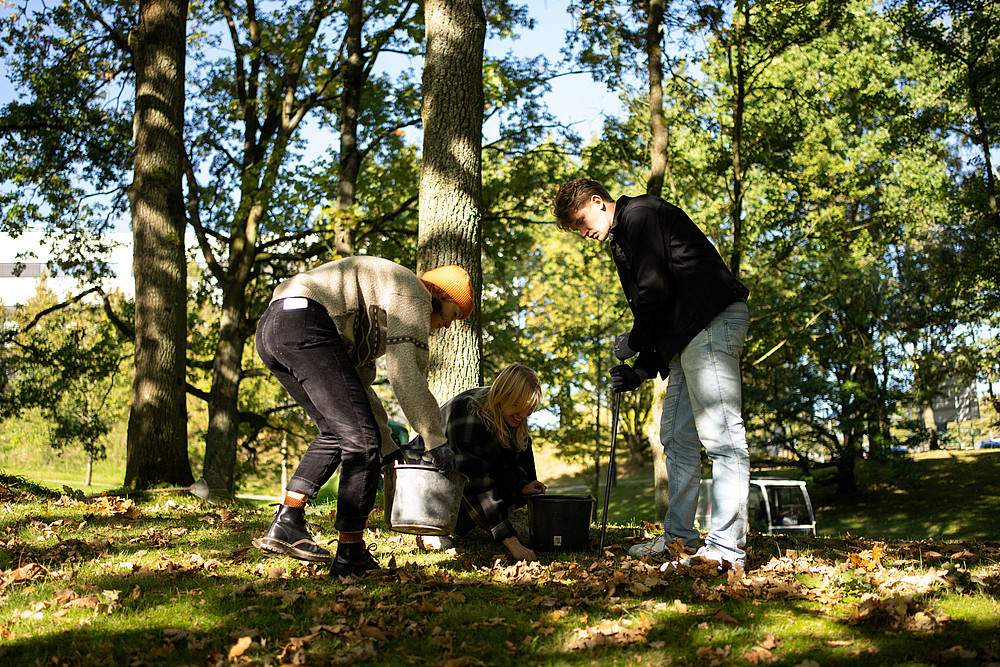
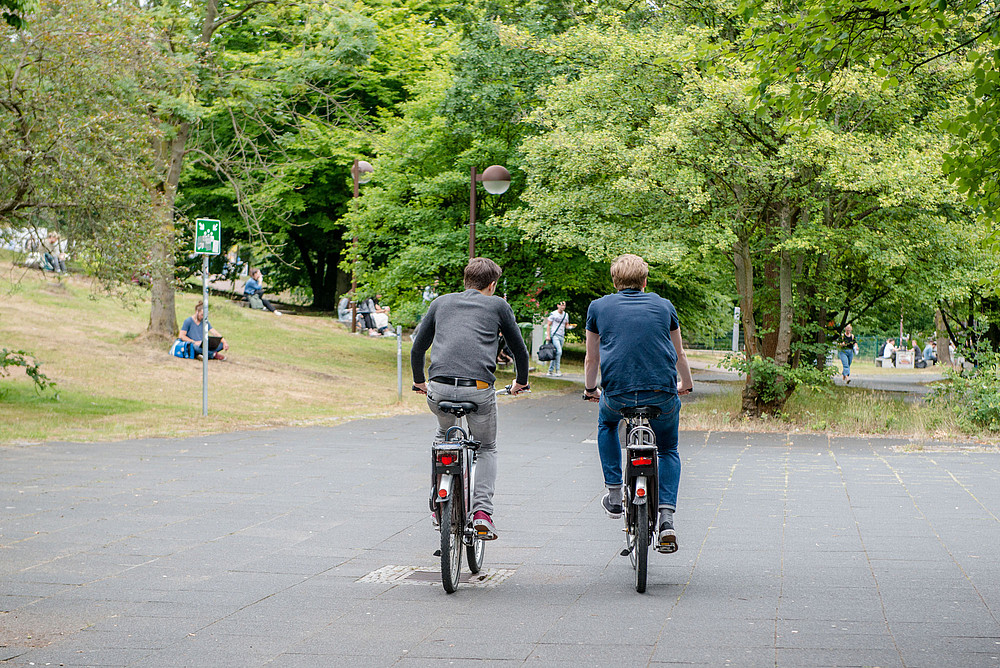
At Ruhr University Bochum and TU Dortmund University, sustainability is embedded in everyday campus life: Dedicated Sustainability Offices coordinate green initiatives such as Sustainability Weeks and Days, biodiversity projects, mobility management, or the transition to renewable energy. By connecting students, researchers, and university administration, these efforts turn sustainable ideas into lasting impact. Students can also grow vegetables in campus gardens, trade clothes at flea markets, or repair their bicycles in self-help workshops—making sustainability a tangible experience.
-
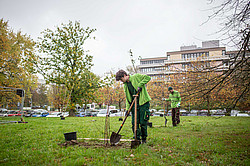
Promoting biodiversity: Horticulturists have planted old apple varieties on the campus of TU Dortmund University, creating new habitats and food sources for insects and birds. -
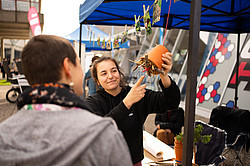
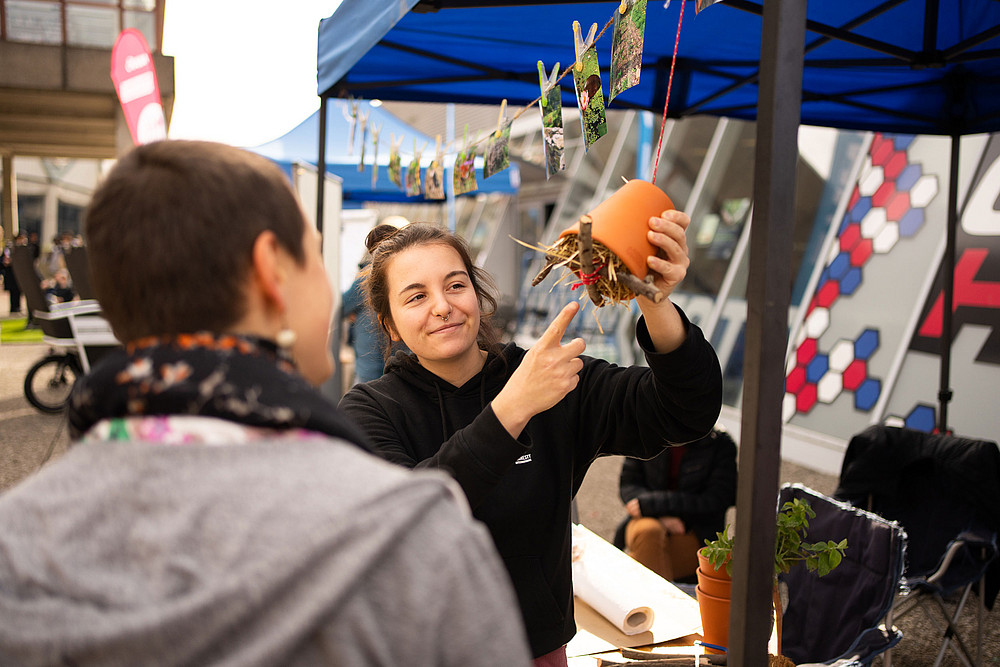
Exploring sustainability together: Ruhr University Bochum’s annual Sustainability Day and TU Dortmund University’s Sustainability Week invite students and staff to discover initiatives, join workshops, and learn how everyone can contribute to a greener future. -
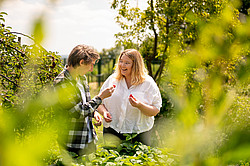
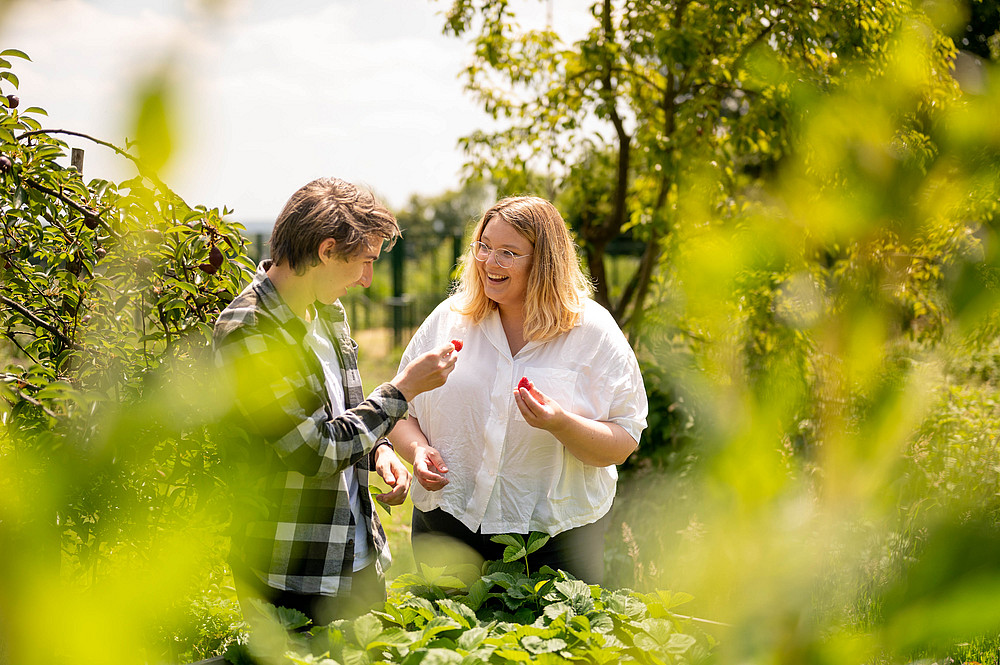
From seed to harvest: In the campus gardens at Ruhr University Bochum and TU Dortmund University, students can cultivate vegetables and enjoy the fruits of their efforts while learning about organic growth first-hand. -
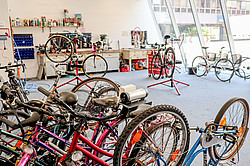
Repairing instead of replacing: At Ruhr University Bochum’s and TU Dortmund University’s AStA bicycle workshops, students can fix their bikes with expert support—saving resources and gaining practical skills. -
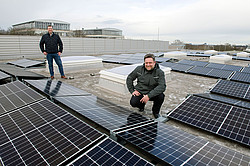
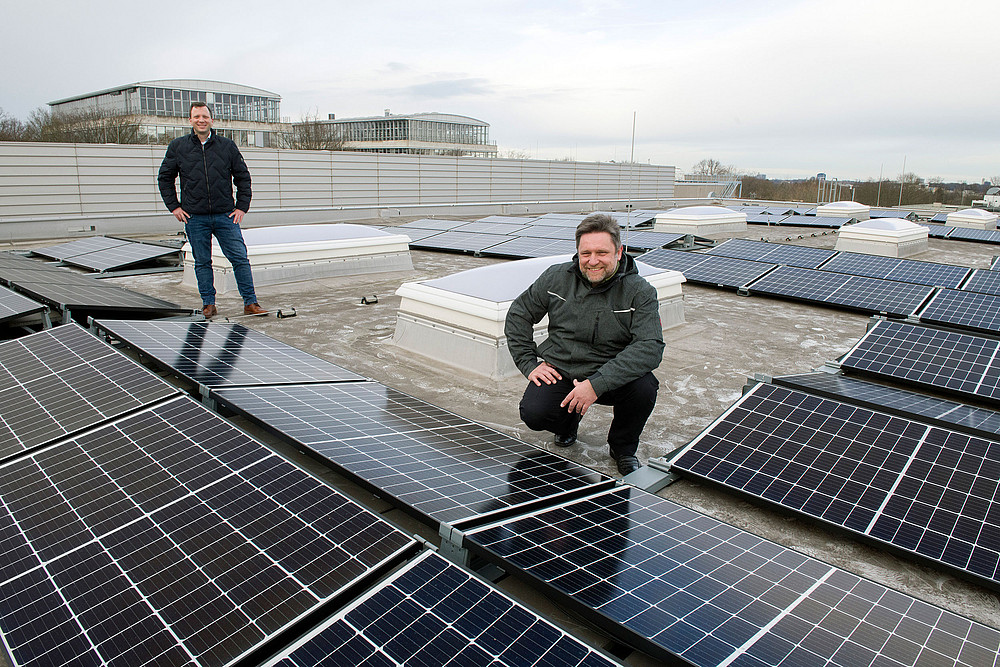
Powering change: Since 2022, TU Dortmund University has been supplementing its energy consumption by purchasing only electricity from renewable sources. An important part of its transition to green electricity is the increasing installation of solar panels on university buildings. -
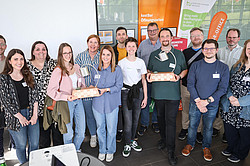
Recognizing exceptional engagement: During their joint Sustainability Week, TU Dortmund University and Dortmund University of Applied Sciences and Arts (FH Dortmund) present the annual “Impact Cup” to honor outstanding contributions to sustainability within their communities.