
Complementary Research Strengths
The Ruhr Innovation Lab brings together the research strengths of Ruhr University Bochum and TU Dortmund University, creating a dynamic hub for cutting-edge research and innovation. By combining Bochum's interdisciplinary expertise in natural sciences, engineering, and humanities with Dortmund's focus on application-driven engineering, data science, and social sciences, the lab fosters groundbreaking advancements. By leveraging our combined strengths, we accelerate innovation, transforming ideas into impact.
Research Focal Areas
By transcending disciplinary borders, researchers at the Ruhr Innovation Lab tackle pressing societal challenges or unravel the final laws of nature. From green chemistry, human-centered computing, and sustainable materials to the fundamental building blocks of the universe – our research focal areas unite scientists from different disciplines exploring novel ideas and working towards solutions for a future-proof society.
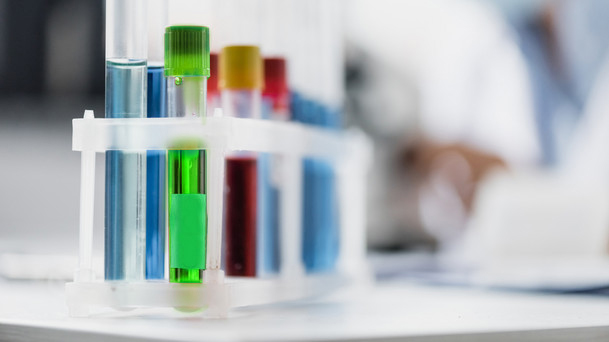
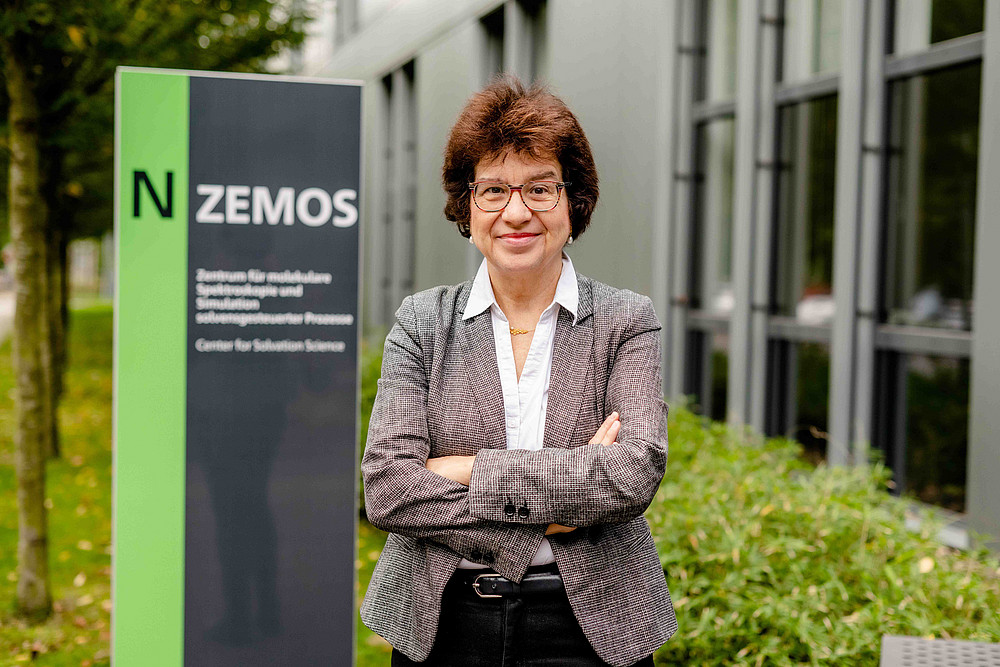
At the heart of this focal area lies a new understanding of solvents as active drivers of reactivity rather than passive media. By redefining solvation as a molecular design parameter, this focal area builds on the internationally recognized Cluster of Excellence RESOLV, 15 ERC Grants, and research buildings such as ZEMOS (4,000 m²) and CALEDO (3,600 m²). The consortium has pioneered bottom-up approaches to local solvent effects, thermodynamics, and reactivity under extreme conditions. Close partnerships with the MPI for Sustainable Materials and MPI for Chemical Energy Conversion, as well as with the MPI für Kohlenforschung, further strengthen its position. Integrating advanced spectroscopy, simulation, automation, and AI-assisted modelling, the field translates molecular insight into predictive solvent and formulation design—accelerating greener catalysis, electrified synthesis and resource-efficient chemical processes.

This focal area integrates Germany’s only Cluster of Excellence in cybersecurity (EXC CASA: Securing the Digital Society), the MPI for Security and Privacy, and the Lamarr Institute for Machine Learning and Artificial Intelligence into a uniquely aligned ecosystem for resilient digital infrastructures. Combining provable security—from post-quantum cryptography to system-level assurance—with trustworthy, resource-efficient “Triangular AI,” the Bochum–Dortmund alliance addresses systemic risks emerging in 6G, IoT, and data-driven societies. Large-scale collaborations such as TRR 391 Spatio-temporal Statistics for the Transition of Energy and Transport, RTG 2624 Biostatistical Methods for High-Dimensional Data in Toxicology, 6GEM, and the Research Center Trust bridge cryptography, statistics, AI, and human-centered research on trust and usability. A dozen ERC grants, a Leibniz Prize in cryptography, and sustained leadership in international security and AI standardization underscore its global prominence. By coupling formal guarantees, statistical robustness, and societal embedding, the ecosystem sets European benchmarks for secure, trustworthy, and sovereign digital systems.

Understanding matter –from the quantum to the ensemble level– requires to integrate insights from two complementary laboratories: terrestrial accelerators and the cosmos itself. This focal area aims to bridge the gap between controlled lab measurements and high-energy cosmic observations, proposing an integrated view that yields novel conclusions and inferences. Anchored in the Cluster of Excellence Color Meets Flavor, CRC 1491 Cosmic Interacting Matter, and the cross-campus Ruhr Astro, Particle, and Plasma Physics Center (RAPP), the Ruhr research constellation brings together particle, hadron, astro-, and plasma physics and contributes to leading collaborations such as ATLAS, Auger, CTAO, Einstein Telescope, IAXO, SKAO, LHCb and the IceCube project. By systematically connecting precision measurements, multi-messenger observations, and plasma physics theory, the consortium delivers robust insights into fundamental forces as well as the composition and evolution of luminous and dark matter in the universe.

A paradigm shift in materials science is underway: discovery is moving from intuition-driven exploration to data-guided design. By focusing on data-driven materials discovery, material synthesis and advanced spectroscopic techniques, this focal area is accelerating innovation. Leveraging the globally used Alexandria Materials Database (>6 million DFT calculations) and the benchmark-leading GRACE ML, it integrates multi-scale modelling (ICAMS) with atomic-scale microscopy and high-end spectroscopy at the research building ZGH and the interdisciplinary research center DAEDALUS. The focal area combines Ruhr University Bochum’s global-scale materials informatics with TU Dortmund University’s expertise in reliable, knowledge-integrated AI at the Lamarr Institute to drive innovation. By uniting databases, platforms, and tools, the Ruhr Innovation Lab accelerates the path from discovery to application and sets benchmarks for reproducible, sustainable materials innovation.
Areas of High Potential

In times of digital disruption, polarization, and global interdependence, understanding how knowledge is produced, mediated, and contested is crucial for resilient societies. This area investigates complexity not only as a feature of the world, but as a result of epistemic practices, media infrastructures, and cultural frameworks that shape what counts as knowledge. Building on strong collaborative structures—such as CRC 1567 “Virtual Lifeworlds,” DFG-funded research groups, the College for Social Sciences & Humanities and KWI - Institute for Advanced Study in the Humanities —researchers from TU Dortmund University and Ruhr University Bochum integrate humanities and social sciences with participatory research formats and decolonial perspectives. Their joint work advances reflexive, globally aware approaches that connect research, teaching, and societal engagement.

Rapid technological change, social inequality, mobility, and demographic shifts profoundly affect mental health across the lifespan and shape educational trajectories. This area addresses these challenges through an interdisciplinary alliance of philosophy, psychology, education, social sciences, and neuroscience. Building on internationally visible infrastructures—such as the German Center for Mental Health (DZPG), the Research and Treatment Center for Clinical Psychology (FBZ), IGLU/PIRLS – Progress in International Reading Literacy Studies, and large-scale digital panels with up to 150,000 participants—the consortium links conceptual foundations with longitudinal data, clinical research, large-scale educational assessments, and real-world interventions. Planned measures include developing integrative theory-driven models, expanding digital cohort studies, advancing evidence-based educational and prevention programs, scaling participatory and citizen-science approaches, and strengthening translational pipelines from research to practice. Together, these efforts foster resilience, educational equity, and sustainable mental health promotion.
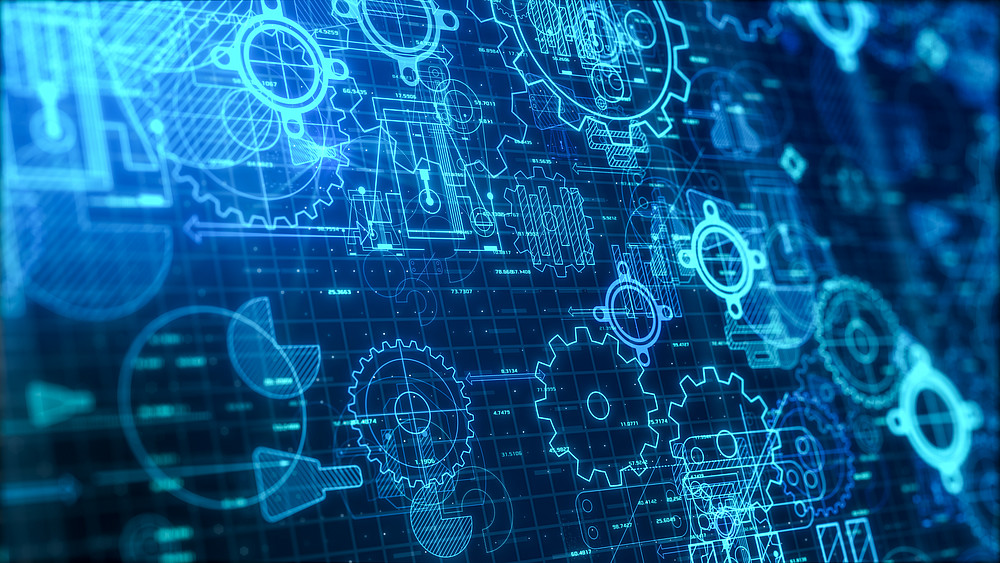
Nonlinear, emergent, and multiscale interactions are ubiquitous, yet in engineering they are often suppressed due to the perceived difficulty in controlling them. However, they offer transformative opportunities. The research area “Engineering Complexity” seeks to understand these interactions and harness their potential in order to enable adaptive materials, load-optimized freeform components, and resilient, resource-efficient production systems. Anchored in the Humboldt Professorship of F. Ömer Ilday and the Center for Complex Interactions (CCI), the TRR 188 “Damage Controlled Forming Processes,” and the RU 5620 on Laser Metal Deposition, it unites Bochum’s and Dortmund’s strengths in production processes, materials, mechanics, and data-driven modeling into one strong research alliance. Combined with the Lamarr Institute’s expertise in AI, this forms the foundation of an internationally competitive consortium dedicated to improving the robustness, efficiency, and versatility of complex engineered systems. The impact is clear: new scientific standards, robust industrial technologies, and sustainable value creation for society.
Distinguished Scientists
-
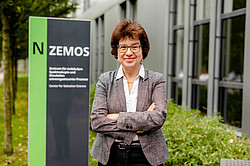
Prof. Martina Havenith holds a professorship in Laser Spectroscopy and Biophotonics at Ruhr University Bochum. She is the spokesperson for the RESOLV Cluster of Excellence and director of the research building ZEMOS - Center for Spectroscopy and Simulation of Solvent-Driven Processes. Havenith is a member of the Academia Europaea and received an ERC Advanced Grant in 2016 for her research into spectroscopic methods. -
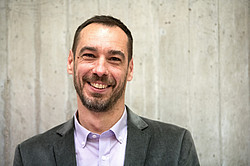
Prof. Edvardas Narevicius holds a Humboldt Professorship in Ultracold Reactions at TU Dortmund University. His pioneering research on quantum effects in molecular collisions has garnered international recognition, earning him an ERC Advanced Grant in 2020 for his experimental investigations of quantum gases. In addition to his work at the Research Center for Chemical Sciences and Sustainability, Prof. Narevicius is also an associated member of the RESOLV Cluster of Excellence. -
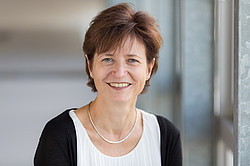
Prof. Gabriele Sadowski has held a professorship in Thermodynamics at TU Dortmund University since 2001. She was awarded the prestigious Gottfried Wilhelm Leibniz Prize in 2011. As a principal investigator in the RESOLV Cluster of Excellence, she studies the role of solvents in chemical reactions and industrial processes. Additionally, Prof. Sadowski is the initiator and spokesperson for the new CALEDO research building and has been a member of the German Science and Humanities Council (WR) since 2022. -
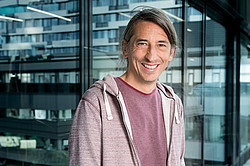
Prof. Eike Kiltz is Professor of Cryptography at Ruhr University Bochum. He is winner of the Gottfried Wilhelm Leibniz Prize 2024 and spokesperson for the Cluster of Excellence CASA. In 2022, he received an ERC Advanced Grant for his project „REWORC – New Foundations for Real-World Cryptography“. Specializing in asymmetric encryption methods, Kiltz aims to secure them against potential quantum computing threats. -
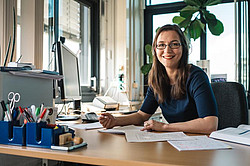
Prof. Julia Tjus is a Professor of Theoretical Physics at Ruhr University Bochum. She is the director of the RAPP Center and spokesperson of the Collaborative Research Center 1491 “Cosmic Interacting Matter—From Source to Signal”. Tjus has made groundbreaking contributions to astroparticle physics, particularly to neutrino astronomy and cosmic ray research. -
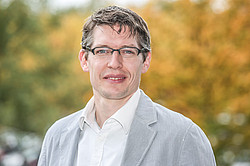
Prof. Johannes Albrecht holds a Heisenberg Professorship for Experimental Flavour Physics at TU Dortmund University. He is a co-spokesperson of the new Cluster of Excellence “Color meets Flavor” and involved with the RAPP center. In 2016, the physicist has received an ERC Starting Grant of €1.5 million for his project PRECISION, which focused on discovering new scalar and vector particles at the Large Hadron Collider (LHC) at CERN. In 2025, the Breakthrough Prize in Fundamental Physics honored the achievements of the international collaboration at the LHC. -
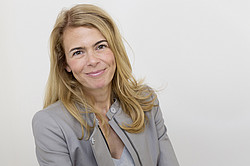
Prof. Susanne Fengler is Professor at TU Dortmund University and serves as director of the Erich Brost Institute for International Journalism. Inducted into Academia Europaea in 2025, she specializes in reporting on migration and EU politics. She led numerous international research projects with partners in Europe, the Eastern Mediterranean or Africa, notably the e-learning platform “Covering Cohesion Policy in Europe” or the “UNESCO Handbook for Journalism Educators Reporting on migrants and refugees”. -
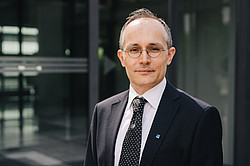
Prof. F. Ömer Ilday holds an Alexander von Humboldt Professorship at Ruhr University Bochum. His pioneering work in developing ultrafast lasers and researching laser-matter interaction has opened up numerous applications, from precision machining to new material processing effects. For his groundbreaking research, Ömer Ilday received numerous accolades including an ERC Consolidator Grant in 2014 as well as an ERC Advanced Grant in 2022. -
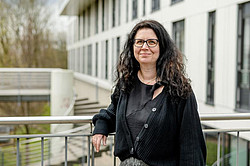
Prof. Silvana Botti is a Professor of Solid State Physics and Material Sciences at Ruhr University Bochum and member of the Research Center Future Energy Materials and Systems. Botti works on groundbreaking topics in condensed matter physics and optics, and is an expert in first-principles simulation of electronic excitations and optical properties of complex materials. -
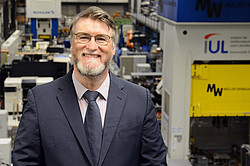
Prof. Yannis P. Korkolis is Professor of Forming Technologies at TU Dortmund University. He serves as the spokesperson for the Collaborative Research Center/Transregio "Damage-Controlled Forming Processes" (TRR 188), a joint initiative with RWTH Aachen University that the DFG extended for a third funding period in 2024. Before his appointment in 2023, Prof. Korkolis was associate professor at various universities in the USA, specializing in engineering mechanics. -
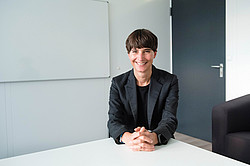
Prof. Katja Crone is Professor of the Philosophy of Mind at TU Dortmund University. From 2002 to 2006, she served as a scientific collaborator at the German Ethics Council. Currently, she co-leads the research project "Systematic Analytic Philosophy in the Ruhr Area (SAPHIR) – Communication and Internationalization," in collaboration with partners from Ruhr University Bochum and the University of Duisburg-Essen, which resulted in an exhibition at the Dortmunder U. -
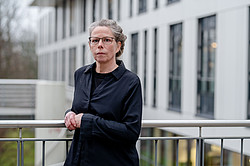
Prof. Christina Lechtermann is professor of Medieval German Studies, focusing on German literature of the Early and High Middle Ages at Ruhr University Bochum. In her research, the medievalist examines religious poetry and the very early precursors of the popular how-to formats. Lechtermann is the spokesperson for the DFG-funded Graduate Research Training Group “Knowledge – Belief – Assertion: Truth Production and Truth Enforcement in the Pre-Modern Era” (GRK 2945). -
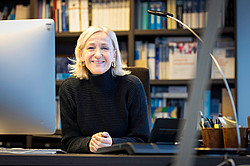
Prof. Silvia Schneider heads the Chair of Clinical Child and Adolescent Psychology at Ruhr University. She is director of the Research and Treatment Center for Mental Health (FBZ) and spokesperson of the German Center for Mental Health. In 2025, she received the German Psychology Award for her pioneering work in the treatment of children and adolescents with mental illnesses.



Outstanding Research Institutions
Research Alliance Ruhr: Research Centers and College

Inter-university research structures have been growing in the Ruhr area since 2021: 50 new research professorships are being created for the University Alliance Ruhr at four Research Centers and one College. Together, they are addressing pressing issues for the future: sustainable solutions for chemical processes, materials for the energy transition, trustworthy IT systems, or the health of body, mind, and environment. Topics in the humanities and social sciences are being explored with international tandem partners.
Lamarr Institute for Machine Learning and Artificial Intelligence
As one of only six national AI competence centers, the Lamarr Institute is a leading center for research and education in the field of machine learning and artificial intelligence. Its interdisciplinary research area of physics aims to improve the understanding of nature by using advanced mathematical and machine learning methods. TU Dortmund University is one of the four partners supporting the Lamarr Institute, along with Fraunhofer Institute for Intelligent Analysis and Information Systems IAIS, the University of Bonn and Fraunhofer Institute for Material Flow and Logistics IML.
KWI – Institute for Advanced Study in the Humanities
Established in 2007 as the first joint institution of the University Alliance Ruhr, the KWI - Institute for Advanced Study in the Humanities (Kulturwissenschaftliches Institut Essen) is unique in being anchored in three partner universities. Specializing in cultural studies, this inter-university institute supports early career researchers and junior fellows while fostering collaboration among researchers from the Ruhr area and beyond. Through these initiatives, KWI plays a vital role in promoting academic collaboration and advancing research in cultural studies.
Partnerships with Non-University Research Institutions

The Ruhr Innovation Lab has established 30 partnerships with non-university research institutions, highlighting its commitment to collaboration in research and the training of young scientists. With 53 joint appointments and twelve graduate programs, these partnerships foster a dense network of interaction in the Ruhr area that enhances doctoral training and facilitates shared infrastructures and data spaces. These collaborations benefit both partners by attracting top researchers and increasing the critical mass needed for ambitious consortia.